
Choko is a captivating traditional Gambian board game that has been played here for centuries. This exciting game combines strategy, skill, and a bit of luck, making it a favourite pastime for Gambians of all ages. Let’s dive into the world of Choko and explore its rules, history, and cultural significance.
Origins and History
Choko, also known as “The Gambia’s oldest board game,” has its origins deeply rooted in Gambian culture. While the exact origins of the game remain unknown, it is believed to have been played by the Mandinka people, one of the largest ethnic groups in the country, long before the arrival of Europeans.
The game has been passed down through generations and holds an essential place in Gambian society. It is not only a playful pastime but also a means of socializing, bonding, and passing down cultural traditions.
Gameplay and Rules
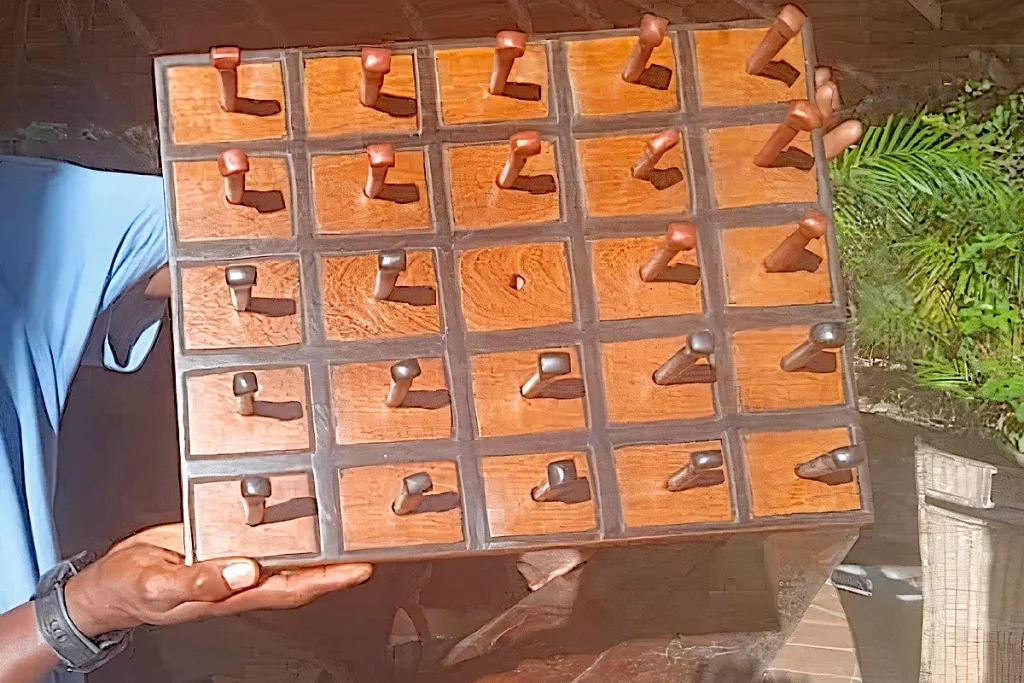
Choko is a two-player game played on a rectangular board divided into compartments or “holes.” The board consists of four rows, each containing twelve compartments. The players sit opposite each other, facing the board.
At the start of the game, each player has twelve pieces, usually represented by seeds, pebbles, or small stones. The objective is to capture the opponent’s pieces or block their moves, ultimately aiming to have the most pieces at the end of the game.
The game progresses with strategic moves. Players take turns picking up all the seeds from one compartment in their row and sowing them counterclockwise into the following compartments. Capturing occurs when the last seed of a sowing move falls into an empty compartment on the opponent’s side, with seeds in adjacent compartments. This prompts the player to capture the opponent’s seeds and add them to their own collection.
The game continues until one player cannot make a move, leaving some compartments empty. At this point, the opponent collects any remaining seeds on the board, and the player with the most seeds wins.
Cultural Significance
Choko is more than just a game; it holds significant cultural significance in Gambian society. It is often played during social gatherings, ceremonies, and festivals, bringing people together and fostering a sense of community. The game promotes strategic thinking, decision-making skills, and patience, making it a valuable teaching tool for younger generations.
Additionally, Choko serves as a symbol of Gambian identity and heritage. It showcases the rich cultural traditions that have been preserved for centuries, reinforcing a sense of pride and belonging among Gambians.
The board pictured here is “Made By Mallang“
Choko in Modern Times
Despite the advent of modern technology and the popularity of digital entertainment, Choko still thrives in The Gambia. It can be found in villages, towns, and even city corners, with players engrossed in lively matches.
Moreover, efforts have been made to promote Choko both within The Gambia and internationally. Tournaments and exhibitions are held, allowing players to showcase their skills and compete for honors. Choko has also gained attention beyond the country’s borders, attracting board game enthusiasts from different parts of the world.
Conclusion
Choko stands as a testament to the vibrant cultural heritage and traditions of The Gambia. Its long-standing presence in the Gambian society highlights the importance of preserving traditional games as they provide a connection to the past and a sense of identity for future generations. Whether played for leisure or competition, Choko continues to captivate players with its strategic gameplay and timeless appeal.
May this ancient board game continue to thrive, reminding us of the rich cultural tapestry that defines The Gambia.